Uncertainty is hard on the human nervous system. When we don't know what's coming, our minds try to fill the gap, usually with the worst-case version. Your heart races at 2 a.m. Your shoulders live up near your ears. You snap at people you love, then feel guilty about it.
If you're going through a change, whether it's a move, a job, a relationship, a health concern or simply a season of not knowing, stress and anxiety often come along for the ride.
I want to share how hypnotherapy can help, and a few things you can try today.
A note: hypnotherapy is a complementary approach. If anxiety is severe or affecting your daily life, please also speak with your doctor or a licensed mental health professional. Hypnotherapy can work beautifully alongside that care.
What stress does in the body
When your brain senses a threat, it switches on the stress response: faster heartbeat, shallow breathing, tense muscles, a busy mind scanning for danger. That response is useful in a real emergency. The problem is that during long periods of change, it can stay switched on for weeks or months.
Over time, that shows up as:
Racing or looping thoughts
Trouble sleeping
Tension headaches, jaw clenching or tight shoulders
Irritability and low patience
Feeling tired but wired
Reaching for coping habits like snacking, wine, scrolling or smoking
How hypnotherapy helps calm stress
We cannot control the events in our lives, but we can control our responses to them. By learning healthy ways of responding to life's triggers, we can create a reality grounded in peace, love and self-compassion. That's the heart of this work.
It teaches your body what calm feels like. Hypnosis is a deeply relaxed state. Each time you experience it, your nervous system gets a little better at finding its way back there on its own.
It changes your response to triggers. In hypnosis we can rehearse the situations that usually spike your stress, an email from your boss, a difficult family call, and practice meeting them with a steadier response.
It works with the thoughts underneath. Much anxiety is fed by beliefs like "I have to control everything" or "something bad will happen if I relax." We gently loosen those patterns.
It gives you tools to use on your own. I teach my clients simple self-hypnosis and breathing practices, and where it helps, tapping (EFT), and I always send a recording, so calm isn't something that only happens in my sessions.
Three things you can try today
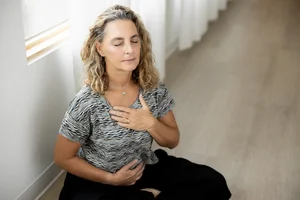
Longer exhales. Breathe in for 4 counts and out for 6 to 8. A longer exhale signals safety to your nervous system. Try five rounds.
Name five things. Look around and name five things you can see, four you can hear, three you can touch. It brings your mind back to the present, where you are actually safe.
A worry window. Give your worries 15 minutes in the afternoon, written on paper. When they show up at other times, tell them, "Not now, I'll see you at 4."
Bonus, from my yoga mat: breathe in and lift your shoulders up to your ears. Breathe out through your mouth and let them drop. Let go of anything from before this moment. Repeat three times.
Working together online
Sessions are 60 minutes over Zoom, or in person when I'm in town, in English, Spanish or Italian. We start with a free 15-minute call so you can ask questions and see if it feels right. Many people feel noticeably calmer after their first session, and a short series helps that calm last.
Frequently asked questions
Can hypnotherapy help with anxiety? Hypnotherapy can help many people reduce stress and anxious feelings by calming the nervous system and changing habitual responses. It works well alongside medical or psychological care.
How many sessions do I need for stress? Many people feel calmer after one session. A series of about four sessions helps make the change last.
Will I learn techniques to use on my own? Yes. I teach self-hypnosis and breathing practices, and I always provide a recording for home use.
Ready to feel steadier? Book a free 15-minute call.
Sara Rossi, CHt · La Dolce Vita Wellness · sararossi.life